Overview
Four mechanisms protect lender capital. Overcollateralization and equity tranche absorb first loss. Institutional custody isolates principal from contract risk. Split-rail architecture means a contract bug cannot drain Capital Layer USDC. Terminal mode is deterministic if invoked.
Security model in one diagram
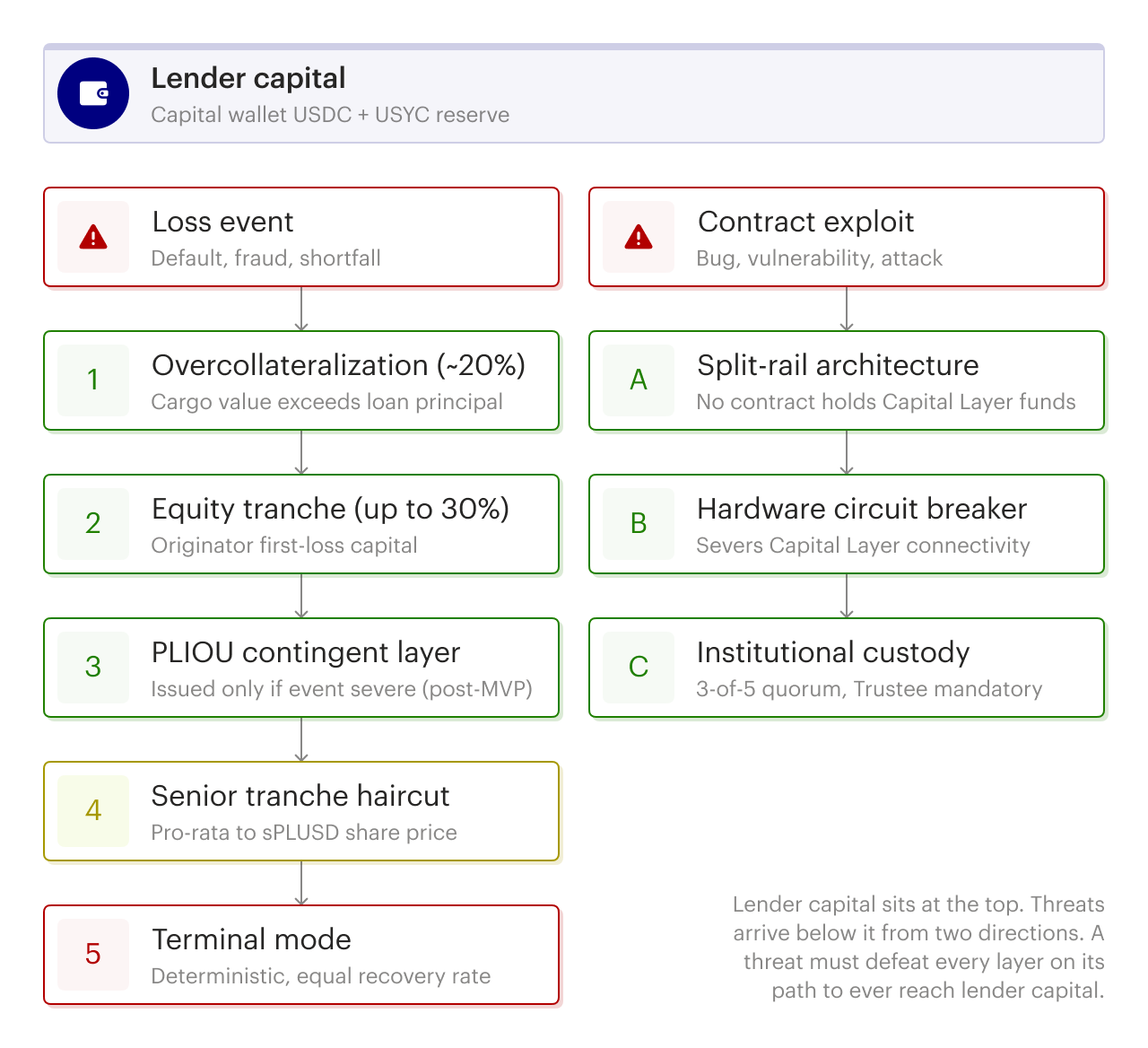
Protection mechanisms
- Overcollateralization — 20% haircut
- Equity tranche — first-loss capital from the Originator on every loan. See Investor protection.
- Custody — institutional MPC under 3-of-5 quorum across four wallets. See Custody.
- Capital safeguards — reserve invariants, two-step screened deposits, two-party yield mints, rate limits. See Capital safeguards.
- Emergency response — incident playbook, GUARDIAN powers, hardware circuit breaker. See Emergency response.
Transparency
Every loan on a public on-chain registry. Every yield mint on-chain. Every governance action through AccessManager with publicly inspectable timelocks. Capital, Treasury, and Withdrawal Queue Wallet addresses published. Drift between PLUSD totalSupply and Capital Layer mark-to-market published as a Green / Amber / Red indicator with action thresholds.